
Introduction
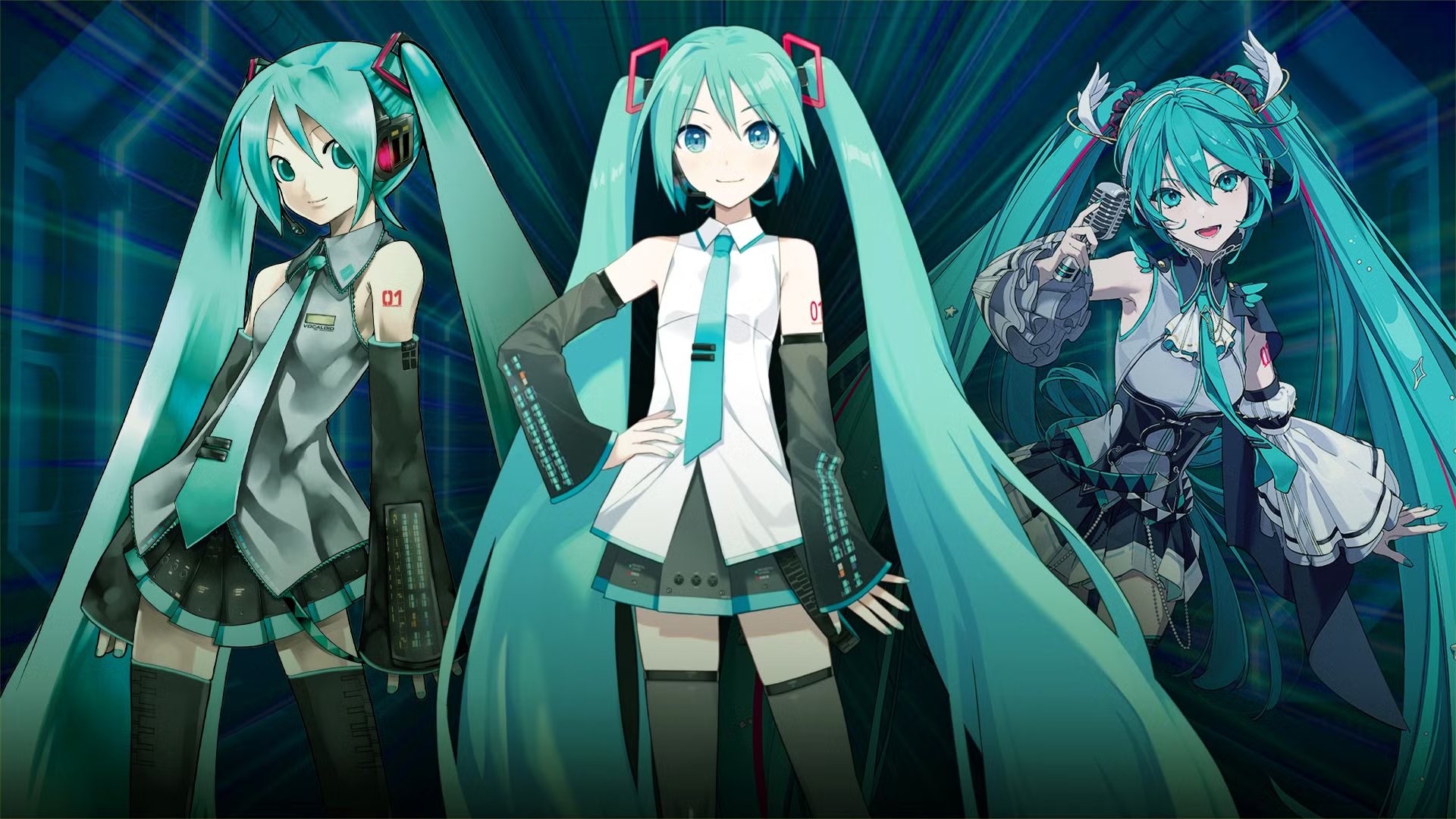
Hatsune Miku is one of the most famous virtual idols in the world. Created by Crypton Future Media and released in 2007, she is a voicebank for the Vocaloid singing synthesizer software and has become a global pop-culture icon. Her voice was sampled from Japanese voice actress Saki Fujita, allowing producers to create songs by typing lyrics and melodies into the software.
Over the years, Hatsune Miku has evolved far beyond a simple music program. She now performs in holographic concerts, appears in games and anime, and inspires millions of fan-made songs and artworks worldwide. As of 2026, Miku remains one of the most influential digital performers in music and internet culture.
The Origin of Hatsune Miku
Hatsune Miku was first released on August 31, 2007 as part of the Character Vocal Series using Yamaha’s Vocaloid engine. Her name means “the first sound of the future”, reflecting the goal of creating a new type of digital singer.
Unlike traditional musicians, Miku does not exist physically. Instead, she is represented as a 16-year-old anime girl with long turquoise twin-tails, and her voice is generated digitally. Music producers around the world can create songs using her voicebank, which has led to a massive community of creators.
Within a few years of her release, fans had already produced over 100,000 songs featuring Hatsune Miku, helping her become one of the most recognizable virtual idols in the world.
Hatsune Miku’s Global Cultural Impact
Hatsune Miku’s popularity quickly expanded beyond music software. She began performing in live holographic concerts, where a 3D projection of Miku appears on stage while a live band performs.
Major events like Miku Expo and Magical Mirai attract thousands of fans every year. These events combine concerts, exhibitions, and fan activities celebrating the Vocaloid community.
In addition, Miku has appeared in many video games, including rhythm titles like Hatsune Miku: Project DIVA and the popular mobile game Hatsune Miku: Colorful Stage!, which has reached tens of millions of downloads worldwide.
Her influence also extends into anime, advertising, and global pop culture, making her one of the most recognizable digital characters ever created.
Major Hatsune Miku Updates in 2026
New Vocaloid 6 Voice Engine
One of the biggest developments for Miku in 2026 is the release of Hatsune Miku V6, an upgraded voicebank built for the Vocaloid 6 engine.
This update introduces major improvements, including:
- More natural and expressive singing
- AI-assisted vocal phrasing
- Improved pronunciation and tone control
- Support for multiple languages
The new system allows producers to create songs in Japanese, English, and Chinese, reflecting Miku’s global fanbase.
These improvements represent one of the biggest technological leaps in Miku’s nearly two-decade history.
Magical Mirai 2026 Concert Series
Another major highlight in 2026 is the annual concert event Hatsune Miku Magical Mirai 2026.
This large-scale festival combines live concerts, exhibitions, and fan activities featuring multiple Vocaloid characters such as:
- Kagamine Rin
- Kagamine Len
- Megurine Luka
- KAITO
- MEIKO
The event will take place across multiple Japanese cities including Hamamatsu, Osaka, and Tokyo, attracting thousands of fans from around the world.
Anime Film and Media Expansion
Hatsune Miku also expanded into cinema with the animated film
Colorful Stage! The Movie: A Miku Who Can’t Sing released in 2025.
The film is based on the mobile rhythm game Hatsune Miku: Colorful Stage! and marked the first feature film centered around Hatsune Miku. It was released in Japanese theaters and later internationally.
This movie helped introduce Miku to even wider audiences outside the traditional Vocaloid fanbase.
Why Hatsune Miku Is Still Popular
Nearly two decades after her debut, Hatsune Miku remains incredibly popular for several reasons:
Fan-Driven Creativity
Anyone can create songs using Miku’s voice, leading to a massive online music community.
Unique Virtual Idol Concept
Unlike traditional artists, Miku exists entirely digitally and can perform anywhere through holograms or virtual platforms.
Constant Technological Evolution
Updates like Vocaloid 6 continue to improve her voice and expand creative possibilities.
Global Cultural Influence
Miku appears in concerts, games, anime, collaborations, and even technology products.
Conclusion
Hatsune Miku is more than just a virtual singer—she is a symbol of the creativity and innovation of digital culture. Since her debut in 2007, she has grown into a global phenomenon that connects music producers, artists, and fans around the world.
With new technologies like Vocaloid 6, major events like Magical Mirai 2026, and continued appearances in games and media, Hatsune Miku continues to evolve and inspire new generations of creators. Even in 2026, she remains one of the most influential virtual idols in entertainment history.
If you are a fan of Hatsune Miku in the UK, you can shop exclusive Hatsune Miku merch & gifts at Hatsune Miku UK Shop, the perfect place for every UK fan.
